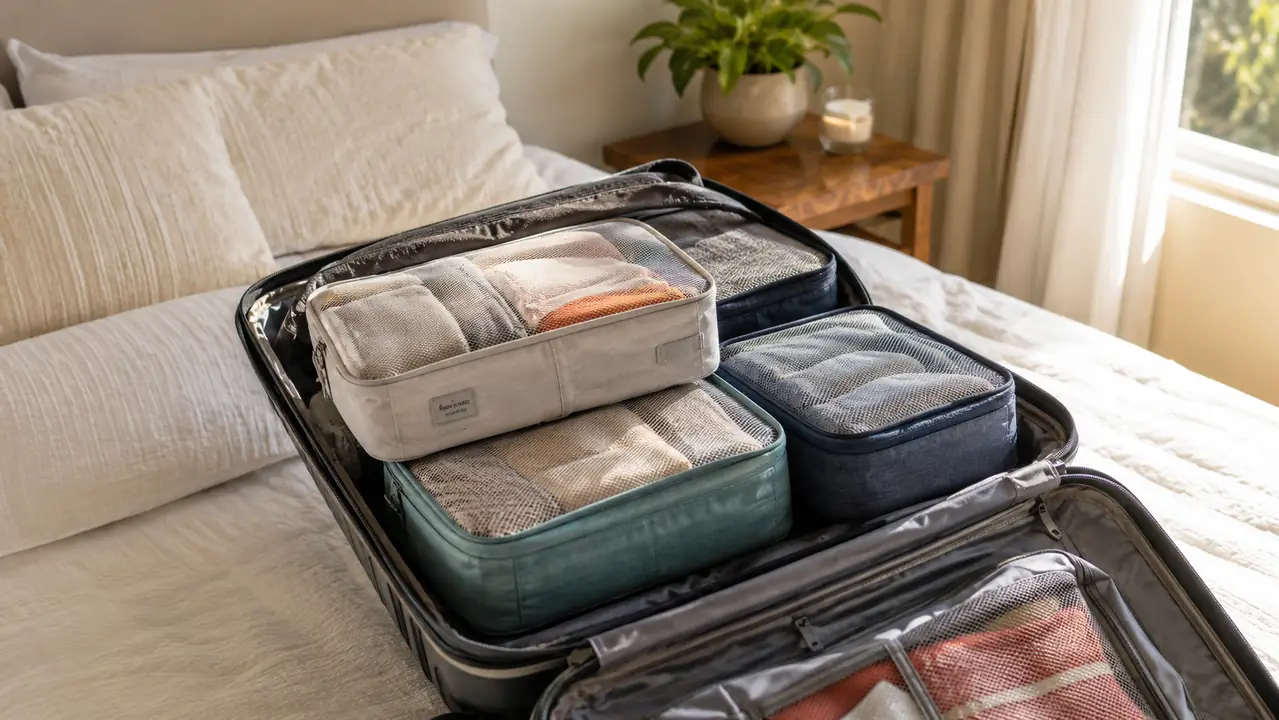
The week before my sister's wedding last spring I stood over an empty carry-on and picked through seven nights of maybe-outfits, wrestling the same math I have lost at for years: if I bring the cardigan I might need, I cannot fit the jeans I know I will wear. For most of my life I packed my way out of that by bringing everything, sitting on the lid to get it closed, then paying to gate-check the bag at the counter. This trip I did it differently, with one set of BAGAIL packing cubes, a half hour on the bedroom floor, and one rule I finally kept. A full week of clothes, carry-on only, no checked fee, no mad dashboard laundry on night three.
What follows is the exact order I work through before every trip that is longer than a weekend. It is the method behind that first carry-on, the one that taught me I had been packing away the time I meant to spend at the airport gate. Nothing here is a promise that any single trick fits a whole closet; the honest point is that the sense of space comes from the system, not from one magic fold.
The one set that makes a week fit
Everything in this guide depends on the cubes staying organized, and the BAGAIL 8 Set has the mix of sizes for a genuinely packed week: the large for pants and bulky layers, the medium for tops, the small for the things you always lose. That variety is why this is the set I reach for every trip.
Amazon Check Today's Price on Amazon →Step 1: Force the one-week edit onto the bed before you touch a cube
Nothing fits a carry-on if you pack like your suitcase has to survive every weather a cloud map could invent. The first step is not folding, it is editing, and I do it on the floor or the bed where I can see everything at once. Lay out one week of outfits, two choices for the evenings, no three variants of the same gray tee. For a seven-night visit that means seven tops, three bottoms, one light layer for cool evenings, and enough underthings that I do not hand-wash at midnight.
The rule that saves the most room is the one I skip most often: a good pair of pants does double duty twice in a week, and the extra bottom stays behind. I plan three real bottoms and rotate them. When I hold the finished pile up before packing, a third of what I first set out is stuff that sounded good in theory and never gets worn. Cutting it now, with the cubes still empty on the table, is ten quiet minutes worth a hundred later.
If you travel for work, do this edit in triplicate: one week of full dress, one of compromise office mix, and one of carryover you truly reach for at home. The test is simple, ask which pieces you actually pulled out last week, not which ones you are hoping to. The answer usually trims the pile on its own.
Step 2: Treat the cubes as a measure, not a miracle
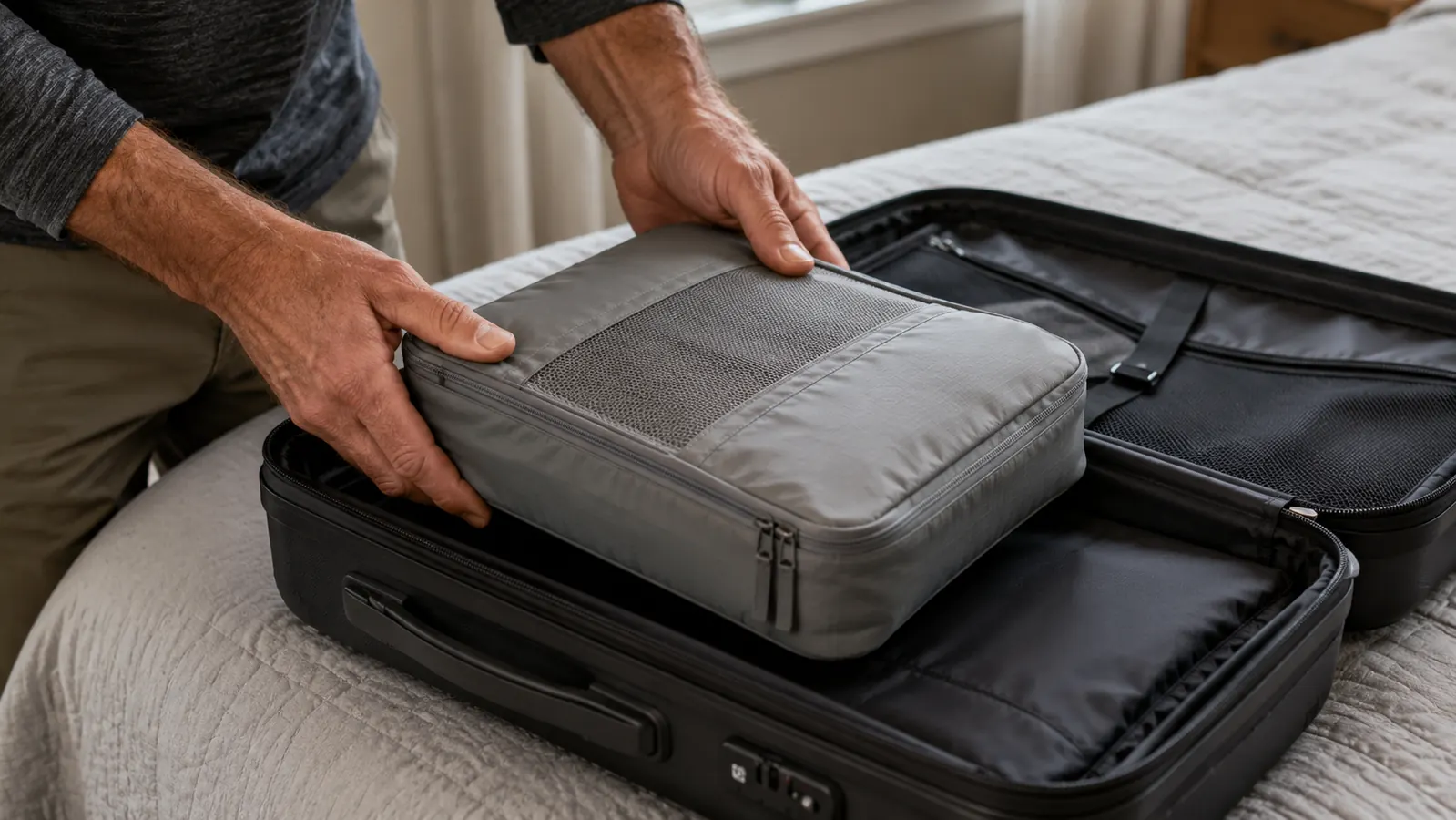
Now the BAGAIL cubes go on the table, and each one takes a single job. The largest holds pants and whatever bulky layer rides along, the medium takes the tops, the small one the underthings and socks, and one stays open because a puffer jacket, a pair of shoes, and toiletries live better on their own. Decide each category before you load, not after, so nothing wanders and the hunt you left home to avoid does not start again in a hotel closet.
The real trick is that the cubes force an honest read on your own volume. Load the medium cube until it zips and the bag has stated its size. If the week's tops fill it to the brim, you now know the larger cubes is spoken for before you even pretend otherwise. The cube almost acts as a small scale for measuring your habitual overpacking, which is the part no packing video tells you.
I keep the set together in a linen closet between trips, which costs nothing, and it turns the whole ritual from a monthly scramble into a five-minute grab. Folding a single type of thing into the same cube every time also teaches me exactly how much room I have for that thing in the bag, better than any spreadsheet.
Step 3: Roll flat and load the bag in order, not all at once
Fold roll each item before it goes into its cube, so a tee becomes a short tight cylinder and a dress folds the same clean width. Everything inside a cube rides flat, which is exactly the point: flat cubes stack in the suitcase like a small set of books, sharing no air, creating no fat lump under the zipper. I load the bag heavy side toward the wheels so it tips less when I carry it, then the layered cubes on top.
The mesh window on each cube is not decoration. I can see the fold of that one blue shirt from the top without unzipping anything, so on a busy day I never have to uproot the whole bag to find a clean top. That single habit has been worth more to me than the full set on a rushed connection, and it survives the first laundry cycle too.
When the larger cubes sits heavy and the medium rides light, that is the bag telling me where I surrendered my edit. I fix a slightly overloaded cube by moving one bulky layer to the small open cube or to the shoes slot, and suddenly the zipper closes like it is on springs. Keeping the heaviest pair in the wheel-side of the bag also means I do not have to re-sort it at the desk each time, the shoes and the puffer stay put for the whole week.
Step 4: Turn the bag into a dresser the moment you arrive
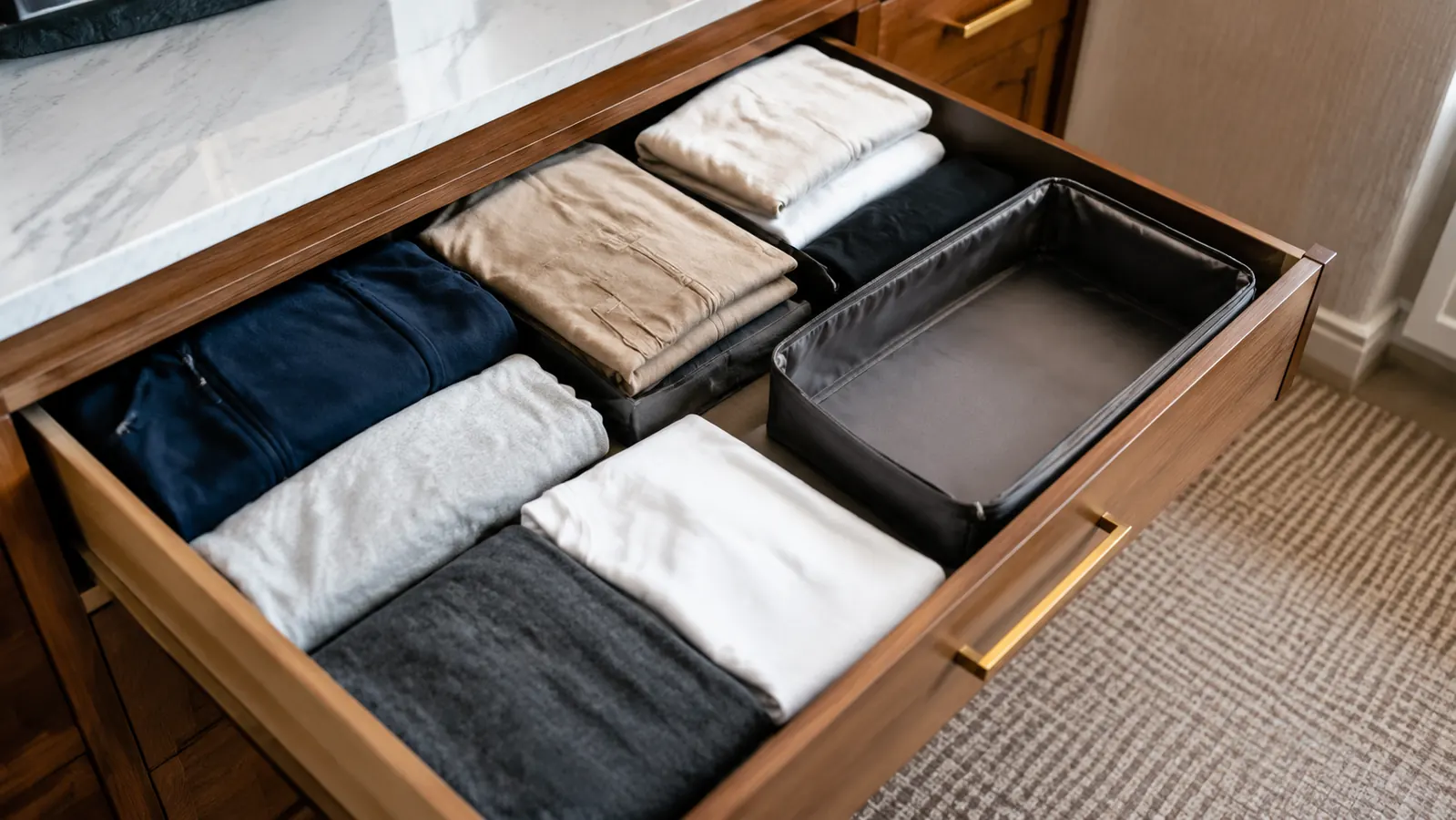
The trip is where the routine earns its entrance fee. At the hotel I unpack by lifting each cube out as a unit and standing it in the open drawer or in two rows on the shelf, no re-folding, no untangling. It empties the bag in a single pass, the room looks settled, and I get the genuine small pleasure of a suitcase that is actually unloaded for the whole week instead of living as a collapsed lump in the corner.
At checkout it is the same move in reverse. Two cubes and the shoes back into their slot, the small cube for the laundry back on top, and I am closing the latches on a bag that arrives looking exactly the way it goes out. The whole turn, unpack and repack, takes under two minutes and never leaves a pile for housekeeping to sweep around.
I have also learned to put the sleep things in their own cube, so the first item out at a late arrival is pajamas and a toothbrush. Nothing else has to move. Reverse it on the first morning of the trip home and you climb into a bag that is already repacking itself, even when your brain is three time zones behind.
Step 5: Re-wear on a real rotation and keep one cube half empty
Last comes the part that stretches the week: a deliberate wear repeat cycle. I do a mid-stay sink wash for the things that cycle fast, and I let the middle cube hold whatever is one wash away from being an outfit again. That one move upgrades a seven-night visit to eight or nine days out of the same pieces, without a single extra pound in the bag.
I also always keep one small cube empty until the last night. It is the dirty-clothes reservoir, so the worn, the washed, and the clean never share the same cube. That single empty cube is the difference between a bag I can re-use in mid and a bag I am dreading to open. It is the smallest discipline on the list and it pays the largest dividend.
The reward is that rules hold when I am exhausted
Packing methods fall apart the night of a late arrival, when you want sleep, not a system. This one holds because none of the steps ask you to be disciplined after the fact; they ask you to be incidentals in advance. Once the cubes are full and the bag loads flat, the hard part is already done, and every hotel room from then on is just repeat of the same two-minute routine.
That is the squared-up payoff of the whole thing. The packing happens at home, fresh, with light, and not at a gate. And most of all, a week in one bag means I never have to guess whether I packed the fourth something that never gets worn.
What Else Helps
The cubes do the heavy lifting, but a few quiet neighbors pull their weight. A packing cube set for shoes keeps the sole fabric off the clean layers. A small roll of soft things, like a packing cube or a fold-in-half pouch, keeps the toiletries out of the top. And one of the most underrated helpers I now bring is a digital-luggage scale that lives in the bottom, so I never arrive at the gate already over the limit and I know before an employee asks if one bulky boot needs to move into my purse.
Beware the reverse trap, buying cubes so large you fill them responsibly. Match the set to your actual carry-on, not to the dream bag. And resist the urge to compress everything: a little soft air in the sweater cube is a comfort, it means you have room to bring one thing back at the end of a good trip.
BAGAIL and a small scale together mean I stop guessing at the check-in counter entirely, which is exactly how I want to enter any week away. The best trips do not start with a tug-of-war over the lid of a full bag. They start with the bag closed, carry-on ready, and nothing left to think about but the plane.
Learn to pack the dress shoes last and flat, with the soft things tucked around them. And one rule I wish I had been told first year: never let the bag charge. Carry the pants you would wear wrong before you carry the pair you would need a miracle for. The goal is a bag you can close and carry, not a bag that can survive a second home.
The best trip of that wedding week began on the floor with the pile on the bed, not at a counter with a heavy bag. Now the first question I ask before any long visit is not what I might wear, it is what I will actually reach for, and the answer goes in a cube. I pack a week in one bag not because I am a minimalist, but because a flat carry-on I can carry is a better frame for the days ahead of me than a checked suitcase I will see in an hour and a half anyway.
The honest win was not that the week fit. It was that I stopped holding the suitcase shut and digging through it to find the right dress. The cubes turned the bag into an actual packing system, not a gamble with my itinerary.
Pack your next week with a set that holds
If you carry on more than twice a year, a decent set of packing cubes earns its place in the very first trip. The BAGAIL 8 Set is a tested, practical place to start, and this whole method is built around it.
Amazon Check Today's Price on Amazon →