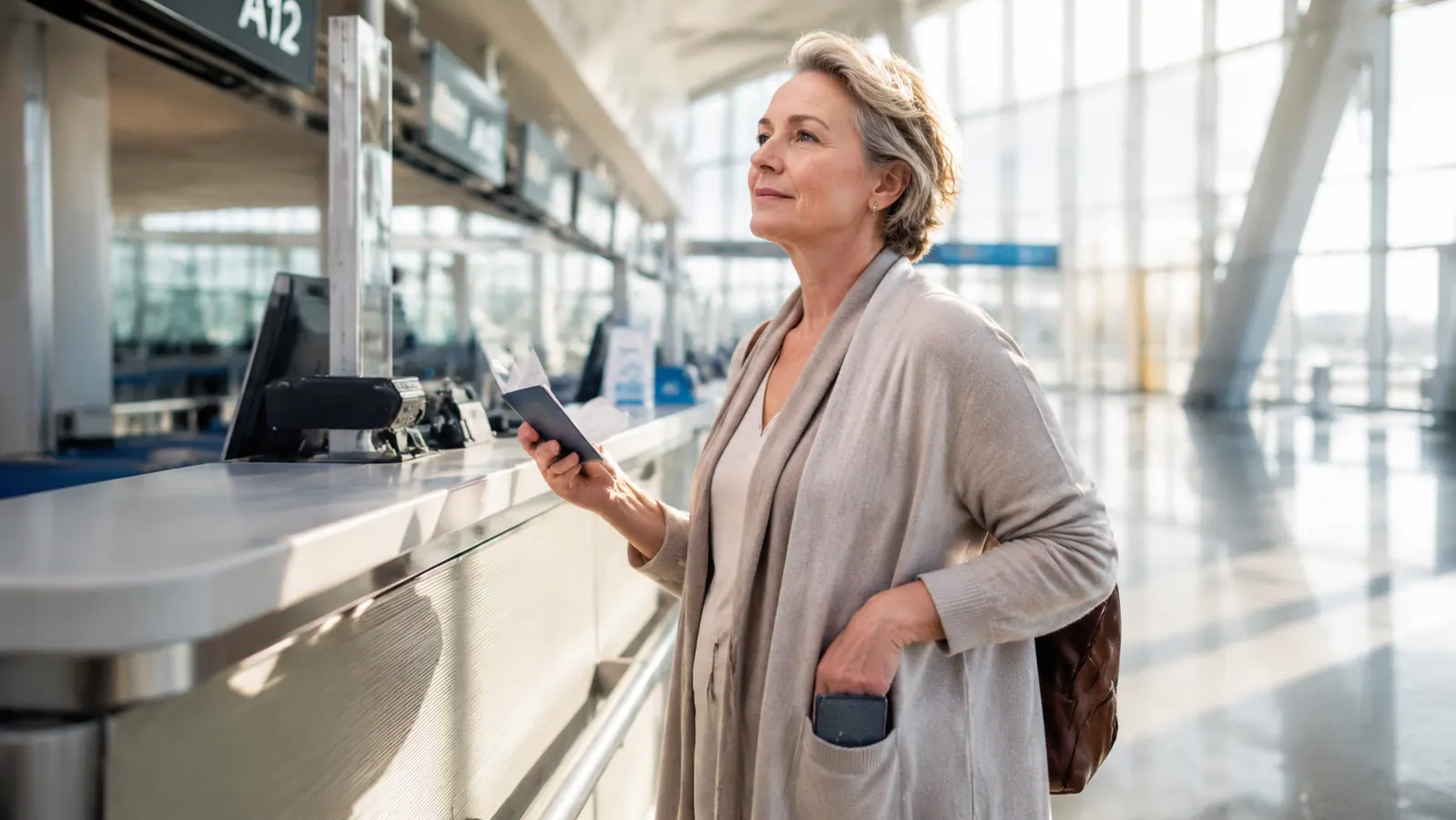
The part of travel that scares me has never been the flight. It is the forty minutes between handing my boarding pass to the agent and reaching the hotel room, the stretch where my passport and my cards are the only things standing between me and a very bad trip. I am a planning person, I have packed a carry-on for my mother at seven in the morning and flown six hours on deadline, but my passport used to live loose in my purse, floating somewhere under the bag of almonds, and every single time I reached the passport check I would feel that small cold wave of, where is it.
Then I stopped treating safety as an accident and started treating it as a routine. Over the last few years of family visits and long-haul flights I landed on five steps that take a few minutes each, built around one small honest tool, the WALNEW passport holder, an RFID wallet that keeps my passport and a spare card together and close. None of it is fancy and none of it works like magic on its own. It is just a repeatable way of moving, so my passport is never in a place I have to hunt for, and my cards are never all sitting where a distracted hour can lose them.
The holder that keeps your passport one pocket away
Every step in this guide comes back to one idea, your passport stays on you, in one place, all trip long. The WALNEW passport holder does that job simply, an RFID-blocking slim case that tucks flat into a jacket pocket or a small neck pouch, with room for your passport and a spare card. It has earned thousands of reviews for a reason, and it is the whole reason my pre-flight check takes seconds.
Amazon Check Today's Price on Amazon →Step 1: Decide that your passport lives on your body, not in your bag
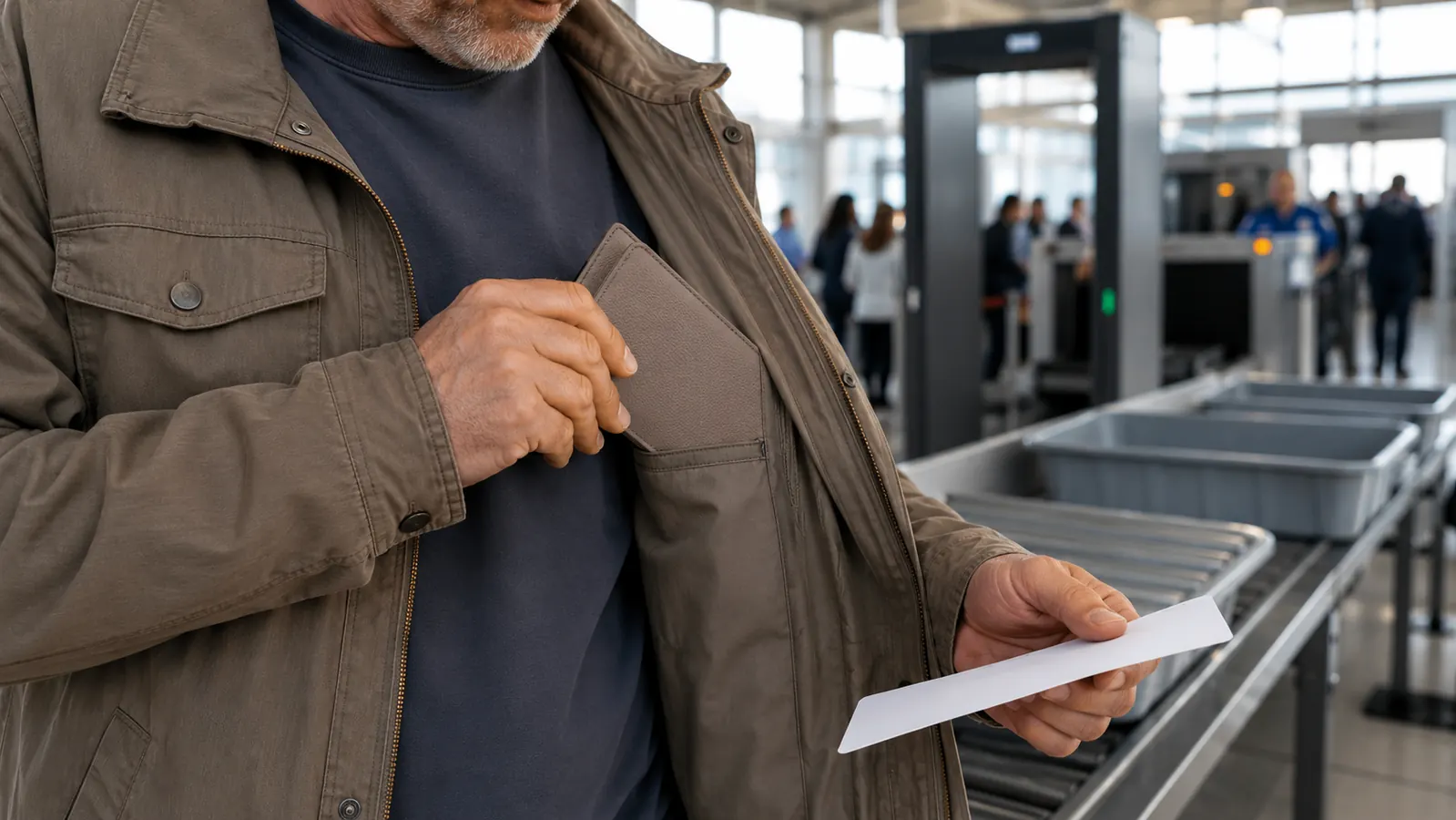
The very first rule is a decision, and you make it before you pack. Your passport and your primary card live somewhere on your person for the entire trip, and nowhere in a tote backpack suitcase or purse that can be set down, lifted, bumped, or forgotten. Whatever you do not carry on your body, you leave secured in the hotel. I watched a woman lose her whole day at a foreign train station because her passport was at the bottom of a tote she had set beside her for forty seconds while she took off her jacket. Forty seconds.
Where exactly on the body matters less than that it is always the same place, and that it is hard for anyone else to reach. A jacket inside pocket is a good home because your arm sits over it. A small neck pouch worn under your blouse is another for long-haul, because you can nap with it and it never leaves you. I have used both. The point is the ritual, your passport always goes back to the same pocket, and your hand checks it every time you move from one kind of place to another.
Do this and you close the huge and most common window of loss. Mostly nobody steals a passport by reaching into a jacket you are wearing, close to your body. They take it from a bag set on a chair, from a pocket you turned your back on, from a carry-on shelf above your head at the moment you are talking. Keeping it on you is not dramatic or clever, it just moves your passport out of the one place it kept getting lost.
Step 2: Carry the passport and one card in an RFID-blocking holder
Once your passport lives on you, put it somewhere that does a little work for you. A slim RFID passport holder like the WALNEW wraps the passport and a spare card into a single tidy case. Two practical sides to this: zero clutter, and the blocking. The blocking part matters because smart cards and some passports carry a chip a powered reader can read without touching them. Ten years ago nobody carried a second thought about it, and today more of us do. A holder that stands in the way of that signal is cheap and quiet insurance on a trip.
Being honest, the RFID risk is a hard one to see happen, and a good part of the worry about it is worse than the real odds. But the holder is a modest buy and adds no weight, so I treat it as cheap peace of mind rather than a shield I trust to save the trip. The better gift is the organization. Same pocket, same flap, the passport in the sleeve, one emergency card tucked behind it, and the whole thing snaps shut so nothing slides out when I pull it.
This is also the step where the gear earns its keep. A loose passport in a pocket becomes a bent cover and a torn corner by flight two. A holder that lives inside the fold gives the passport a flat padded home every time your bag is tossed through a bin onto a seat. Mine carries the scuffs from a year of duty and the passport inside is still clean and flat, which is more than you can say for a passport set loose.
Step 3: Split your cards, so nothing can take every door at once
This is the step I wish someone had told me ten years earlier. Do not carry every card in one thing, your everyday card, your debit, your backup all in the same wallet. If that one thing is lifted or left behind, everything is gone at once. Instead, divide. The short list, the card you use for real life on the trip plus one spare, stays in your hand. Everything else, the bigger balance, the backup card, all of it goes in the room safe at the hotel.
The beauty of splitting is that losing the one thin thing you have is a nuisance, not a disaster. On the trip where I carried only my passport holder and one single card, a pickpocket would have found a very slim prize. The real money, the unbroken card, the photo copies, all of it out of reach and locked on the other side of the room. You can cancel one card and be annoyed for a day, but you cannot cancel your identity sitting in a stranger's hands.
The card you carry should be the one with the best travel protection, and check with your bank that a trip will not flag it. Some banks want a short travel note so they do not freeze a working card on day two in a foreign city. Make that a short call the week before, so the single card you carry actually works when you reach the counter.
Step 4: Photograph everything and lock the backups somewhere safe
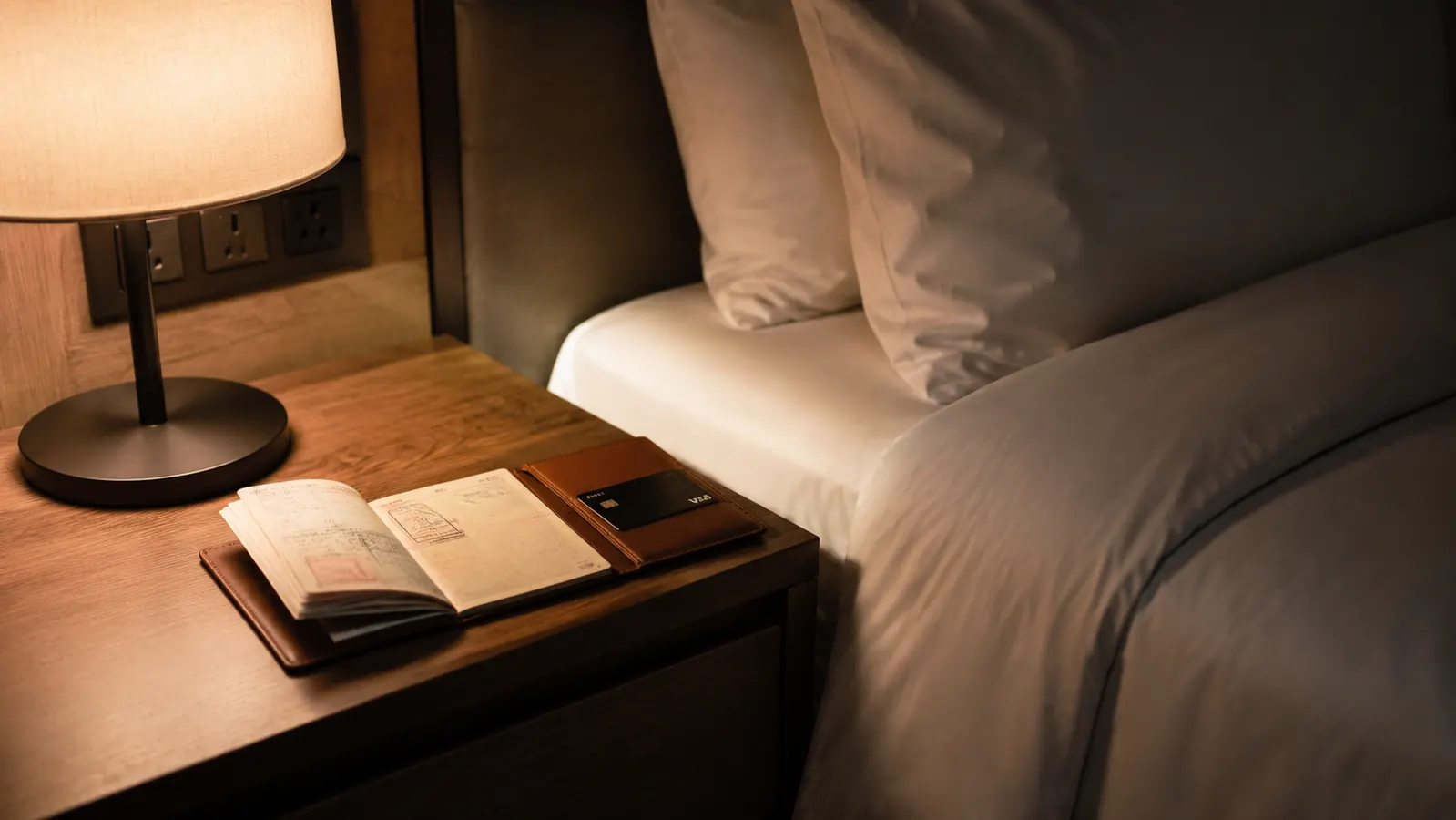
Before the door, take a quiet ten minutes with your phone. Photograph the photo page of your passport, the front and back of every card you are carrying, and the number of the one you will leave in the safe. Also photograph the numbers you would need in a pinch, the bank's international line and the emergency contact of your country's embassy. Then, the essential bit, send that photography to a second home, a secure email you own, or a cloud only you and one trusted person can reach.
The reason you keep your passport photos in a second spot is that your phone is also at risk on a trip. A placed photo lives somewhere that is not in your bag, so if your passport case is stolen and your phone disappears in the same bad hour, you still have every number from the safe of a note. This is the difference between an awful two weeks and an annoying afternoon. It is quiet insurance that costs nothing.
Do the same out loud. On her last long flight to see the grandkids, my sister photographed her passport at the gate, and she says it was the only reason the return stayed calm when she had to replace a lost one overseas. She spent hours at a consulate, not a whole trip. The copies do not weigh a thing, and the one time you need them they are the entire world.
Step 5: Run the pocket check before you leave any place
The final step is a habit, and habits are the only part you actually have to build. Every single time you are about to walk away from a place, a cafe table, a station bench, a hotel breakfast counter, you run the same three-second check. Pocket one, the passport holder. Pocket two, the one hand card. Pocket three, your phone. Tap all three, and walk. It takes less than a breath and it catches most of the losses that happen in the forty seconds of standing and moving on.
I also make the check a rule before I close a room door or step out of any vehicle. You never need it until you skip it, and the one time you skip it is the whole embarrassing story. A friend lost her passport at a rental counter in Lisbon because she set it down to dig for coins and walked away. Ninety seconds. The check would have caught it between the phases and the whole story would have been a nothing.
Once the habit is in place it quietly absorbs the fear into a repeatable step. Tap the pocket before you stand, the passport is where it belongs, move on. It does not guarantee a perfect trip, no routine does, but it clears the ordinary straw moments of worry you used to carry. That is the whole point of a system like this, it is not about the dramatic worst case, it is about the plain stretch of traveling with your hands free.
What Else Helps
The RFID holder does the daily work, but a few quiet neighbors pull their share. A slim neck pouch worn under your shirt is the natural partner for really long trips and nights when you will doze, because it keeps the passport and a spare secure even as you nap on a train or a flight. Your holder slides right inside and leaves your hands free for the map or the book.
The other honest helper is your own quiet, and it is the only tool you cannot buy. Do not fan out a wallet in a crowd or count bills on a cafe table. A traveler who holds no gold in the open, who looks like the passport is merely on their person, gets far less attention. Nothing about hiding and everything about not looking like a target.
It all comes back to the same through-line. Your passport lives on you, in one place, cased by a holder, with the cards split and the copies elsewhere, and a check before every move. Those are a few minutes of order folded into a hundred ordinary trips, and they ended the one thing that used to make my stomach jump before the airport, the sense that my identity was somewhere I could not reach.
A trip is the people and the places and the food, and a ragged one sets all of that to one side. So before your next trip, give your passport a fixed home, a flat holder, one pocket, one card beside it, and one quick check before you walk out a door. The peace of mind is not a luxury, it is the stretch of my head that used to be full of where did I put it now holding better things.
The whole turn for me was the pocket check. My passport goes flat into the holder, the holder goes into the same jacket pocket, and before I stand I tap the spot. On the trip to my mother's last year I never once had that cold wave at a line, because my hand already told me it was there before my head even asked.
Give your passport a fixed home before your next trip
If you fly more than a couple of times a year, a slim RFID passport holder is the cheapest travel insurance there is, and this whole routine was built around it. The WALNEW is a practical, tested place to start, and it makes the five steps feel like nothing at all.
Amazon Check Today's Price on Amazon →